
Adam Montgomery isn’t short on discipline. For nine years, he opened Duolingo and worked through his Mandarin lessons. Nine years of daily exercises, badges, and streak notifications.
There was just one problem: after nearly a decade, Mandarin still wasn’t something he could actually use.
“After years on Duolingo, I could only understand how to repeat sentences from rote learning,” Adam says. Once the app introduced Chinese character writing, that helped a little. but he was still mostly stuck at the level of basic phrases like “Ni hao.”
That gap between “years of practice” and “actual ability” is what eventually sent him looking for something else.
Nine Years In: What Duolingo Got Right
It’s worth being fair to Duolingo here. Nine years is a long time to stick with anything, and that kind of consistency doesn’t happen by accident.
Two things kept Adam coming back. The first was simply not knowing about other options. He had tried Rosetta Stone years earlier and found it too basic, and didn’t know what else was out there. The second, by his own admission, was a bit of an obsession with keeping his streak alive. It’s now approaching ten years, even on the days he only spends a few minutes on it just to keep it going.
His sessions changed a lot over time. At first, he was putting in 20-30 minutes a day on listening and vocabulary exercises. But as it became clear the app wasn’t actually getting him anywhere, he scaled back to about five minutes a day, just enough to protect the streak.
When the Streak Stopped Meaning Progress
The moment reality set in wasn’t subtle. It happened when Adam started watching Chinese-language streaming shows, or found himself in an elevator with native Mandarin speakers. He could pick out the most basic words and nothing else.
“It was disheartening after so much time put into learning,” he says.
That wasn’t one dramatic realization so much as a slow one: Duolingo was never going to take him past simple phrases, no matter how long he kept at it.
Finding LingQ on Reddit
Adam found LingQ the way a lot of members do these days: searching Reddit for something better.
He doesn’t remember his exact search, but he was on a language-learning subreddit looking for a good Chinese learning app when someone mentioned LingQ. The pitch, as he remembers it: a steeper learning curve on the interface, but real payoff once you got past it, actual grammar understanding, not just phrase repetition, and a huge amount of content.
LingQ works on a different principle than Duolingo entirely. Instead of translation drills, you read and listen to real Mandarin content, articles, podcasts, shows, books, and the platform tracks every word you know and every word you’re still learning. Click an unknown word, see the translation, and it gets saved as a LingQ. Over time, as you meet that word again in new content, it moves from new to familiar to known.
This approach is called comprehensible input: the idea that real acquisition happens through understanding content that’s just slightly above your current level. It’s the same method LingQ co-founder Steve Kaufmann used to learn Mandarin himself, and it’s the philosophy the whole platform is built around.
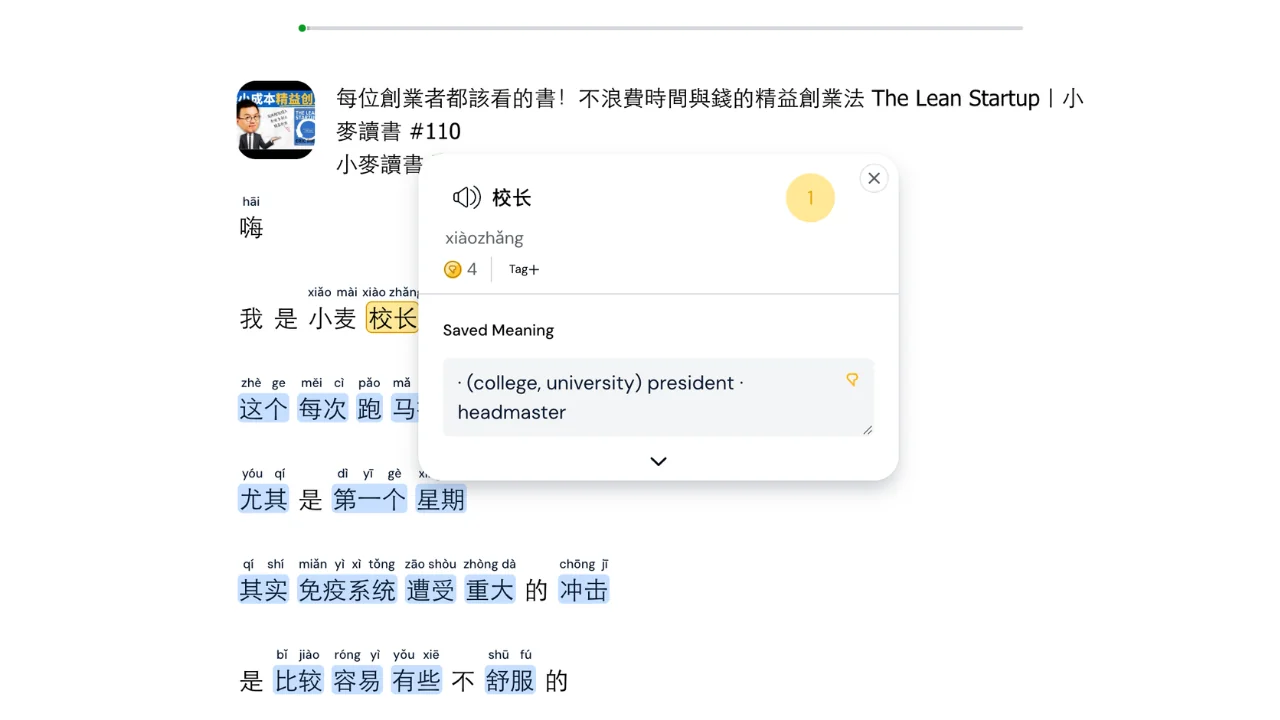
Adam’s first impression was a mix of awe and genuine intimidation. He’d only ever known Duolingo’s “tap and reward” system, as he calls it, tap a word, hit enter, get the little reward sound. LingQ’s actual functionality, clicking words for meanings, listening back to specific sections, felt like a lot more than he was used to. It took him a few days to figure out how it all fit together, but once it clicked, he found it simpler than he expected, in a good way. What sold him was the flexibility: you can go deep on a lesson’s words and grammar, or just breeze through it listening on the way to work.
Why the Library Was Enough
Unlike many LingQ members who lean heavily on importing their own content, Adam sticks mostly to LingQ’s built-in Mandarin library, and he’s still exploring it as his level climbs.
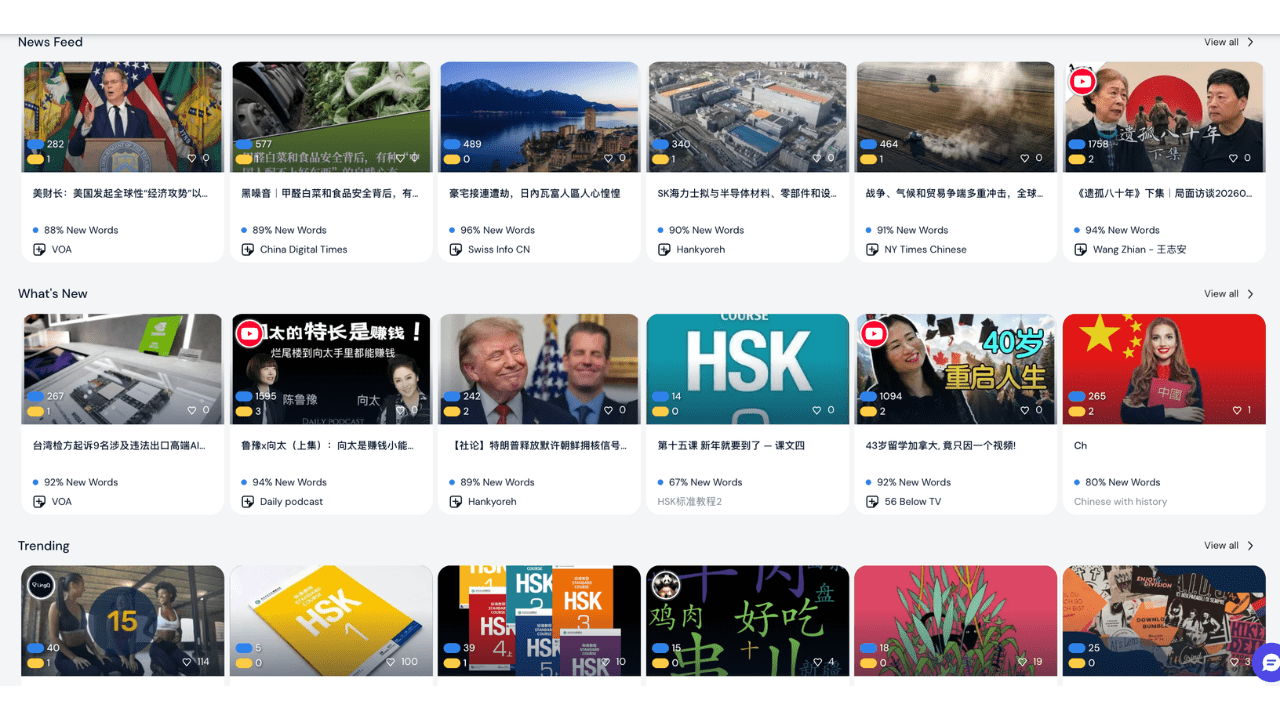
He recently made a deliberate jump from intermediate content straight to fluency-level lessons with native speakers at full speed. His approach: work through one lesson repeatedly over a week or two until he’s comfortable with most of it, then move on. Early on, guided courses and stories were his favorites, they made the grind fun during what he describes as the “this language is completely different from English and it’s going to be a ten-year commitment” moment every learner hits eventually.
The real shift happened within the last year, once he started tackling native-speaker-level lessons directly. They’re still above his level, but he’s found that pushing past the slower beginner and intermediate pace is the only way to actually close the gap, even if he still dips back into easier lessons occasionally to review.
What Actually Changed
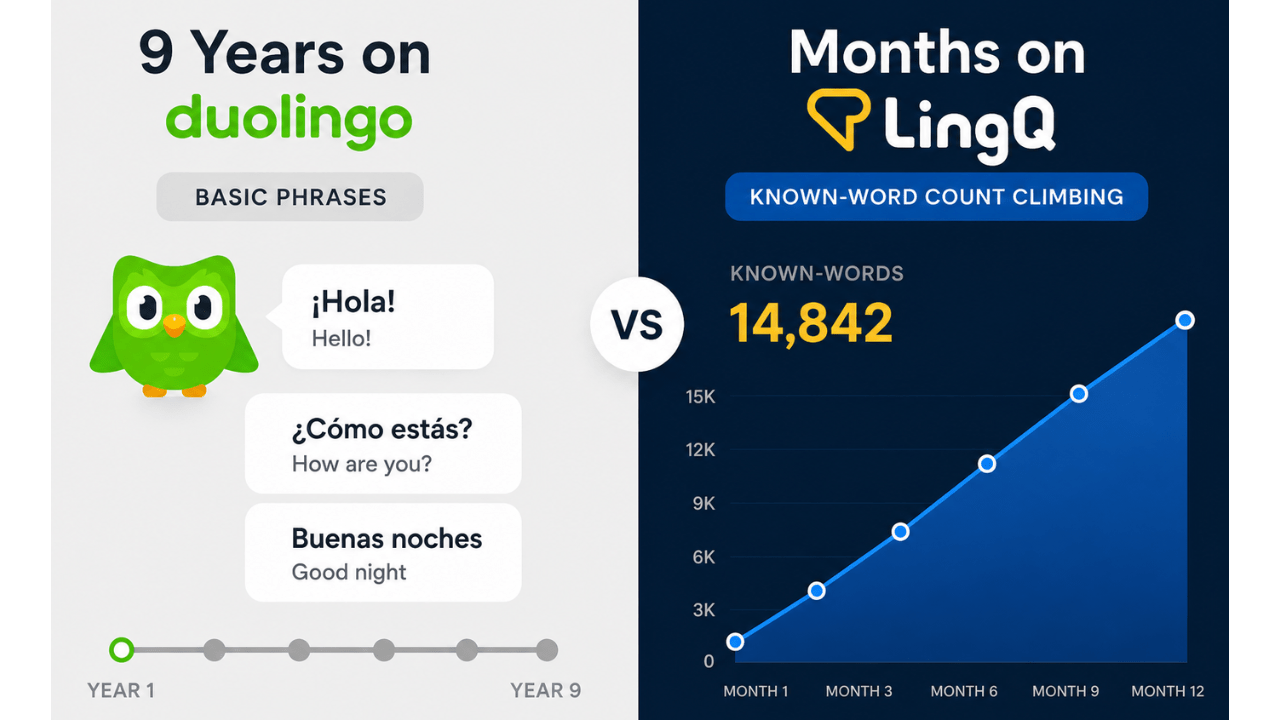
Looking back at nine years on Duolingo versus his time on LingQ, Adam doesn’t mince words: “I now feel like I lost a lot of time using Duolingo. If I had known about LingQ years ago I have no doubt I’d be advanced, leaning into fluency level of Mandarin.”
The shift wasn’t gradual, either. He describes it as instant, having grammar explained just by tapping on words, combined with access to so much varied content, felt like a stalled vehicle finally moving again.
A Routine Built Around Real Content
Adam’s current routine is simple and consistent: 10-15 minutes in the early morning, a lesson during his commute (about 40 minutes total there and back), and if he’s not too tired, another 5-10 minutes before bed.
He recommends LingQ to friends often, especially anyone stuck the way he was. His advice is direct: don’t waste time the way he did. Duolingo won’t take you beyond a very basic level, while LingQ can take you as high as you’re willing to put in the work for. He’s upfront that the interface takes a day or two to get used to, but tells people it’s worth pushing through that adjustment period.
Advice for Anyone Still on the Fence
For anyone years into a Duolingo streak and wondering if switching is worth it, Adam’s answer is simple: take the leap. In his view, Duolingo won’t get you anywhere close to what it markets itself as delivering. LingQ progress, by contrast, happens fast enough that it becomes its own motivation, the more things click, the more you want to keep going.
He often points to that elevator moment, the first time he could actually follow most of what native speakers around him were saying. It’s still a long road to fluency, as it is with any language, but for the first time, he could see himself actually getting there.
Asked whether he’d still recommend Duolingo to a Mandarin beginner, Adam’s answer is a clear no: skip it and go straight to LingQ. “If they really want to learn a language, it’s the only serious way to do it. Duolingo isn’t a ‘bad’ app, but it simply doesn’t live up to the hype and marketing.”
Start Reading Real Mandarin
Adam’s numbers are his own, nine years, a Reddit search, a switch that finally worked, but the shape of the story is one LingQ hears often. The habit was real. The fluency didn’t show up until the method changed.

If you’re at that point with Mandarin, or any language, LingQ is built for exactly this next step. Start with the library, or import content you already love. Your first 20 LingQs are free.
Start learning Mandarin on LingQ →
FAQs
Is LingQ good for learning Mandarin specifically?
Yes. LingQ’s Mandarin library covers everything from beginner mini stories to advanced podcasts, news, and novels, with pinyin and character support. You can also import your own Mandarin content from almost anywhere online.
Can I use LingQ and Duolingo at the same time?
You can, but many members find that once they start reading and listening to real Mandarin content on LingQ, Duolingo’s isolated exercises start to feel less useful by comparison. Duolingo can work as an early habit-builder; LingQ is where the real acquisition tends to happen.
How long does it take to see real progress with Mandarin on LingQ?
It depends on time invested, but most members notice a shift in comprehension within a few months of consistent reading and listening. Mandarin’s tonal system and character-based writing mean early progress can feel slower than with more English-adjacent languages, but the tracked known-word count makes that progress visible even when it doesn’t feel fast.
What if I’m a total beginner in Mandarin?
LingQ’s Mandarin Mini Stories are designed for exactly this. They use simple, repetitive sentences read by native speakers, and many learners work through them before moving on to more complex library content or their own imports.